Guides · Ritual
Run Monday from the board, or admit you do not have a CRM.
If the meeting needs a slide that was exported on Sunday night, the CRM is a filing cabinet and the spreadsheet is the product. Here is a 45-minute agenda that makes the live board do the work.
The rule
No parallel numbers. The amount on the opportunity is the amount you discuss. The stage on the card is the stage you discuss. If someone says “actually it’s further along,” they change the card in the meeting, in front of everyone. That five seconds of discomfort is the whole point.
Forecast fan fiction starts when probability never moves and the slide is allowed to disagree with the board. Kill the slide. Screen-share the pipeline. Saleslox is built so My Stats, the opportunity board, and the forecast tab are the same math.
45 minutes, four blocks
1. Aging queue — 15 minutes
Start with deals that have gone quiet, not with wins. Wins make people feel good and hide the fire. Open the stalled list. For each card: next action with a date, or disqualify. Do not “keep an eye on it.” That phrase is how 18-day silences are born. See why deals stall.
2. Commit vs board — 15 minutes
Read the weighted forecast. Then click into commit-sized deals. If a name is on the commit list and missing from the board, it does not exist. If it is on the board at 20% and on the slide at 80%, the owner changes probability now or takes it off commit.
This is the part people hate. It is also the part that makes quarter-end less of a novel.
3. Quotes in flight — 10 minutes
Which quotes are sent, expired, or waiting. Not “I think we sent something last week.” The document is a record on the opportunity. If the latest version lives in a thread called final_v7, you do not know whether it was accepted. Send it from the deal.
4. New names and next actions — 5 minutes
Hot inbound that sat. Duplicate owners. Anything without a next action. Then stop. Do not turn Monday into a tour of every open card. That is how meetings become 90 minutes and nobody updates anything afterward.
Who speaks
The owner of the card speaks. Managers ask one question: “What happens next, and when?” If the answer is a feeling, it is not an answer. If the owner does not know, the deal is stalled even if the last activity was yesterday.
Do not let the loudest closer narrate other people’s pipeline. The board is the shared object so you do not need a storyteller.
What to show on screen
- Opportunity kanban or table, filtered to the team in the room.
- Aging / stalled queue if you are on Professional.
- Forecast view that is calculated from those same opportunities — not a pasted chart.
- Quotes list for deals in Proposal and Negotiation.
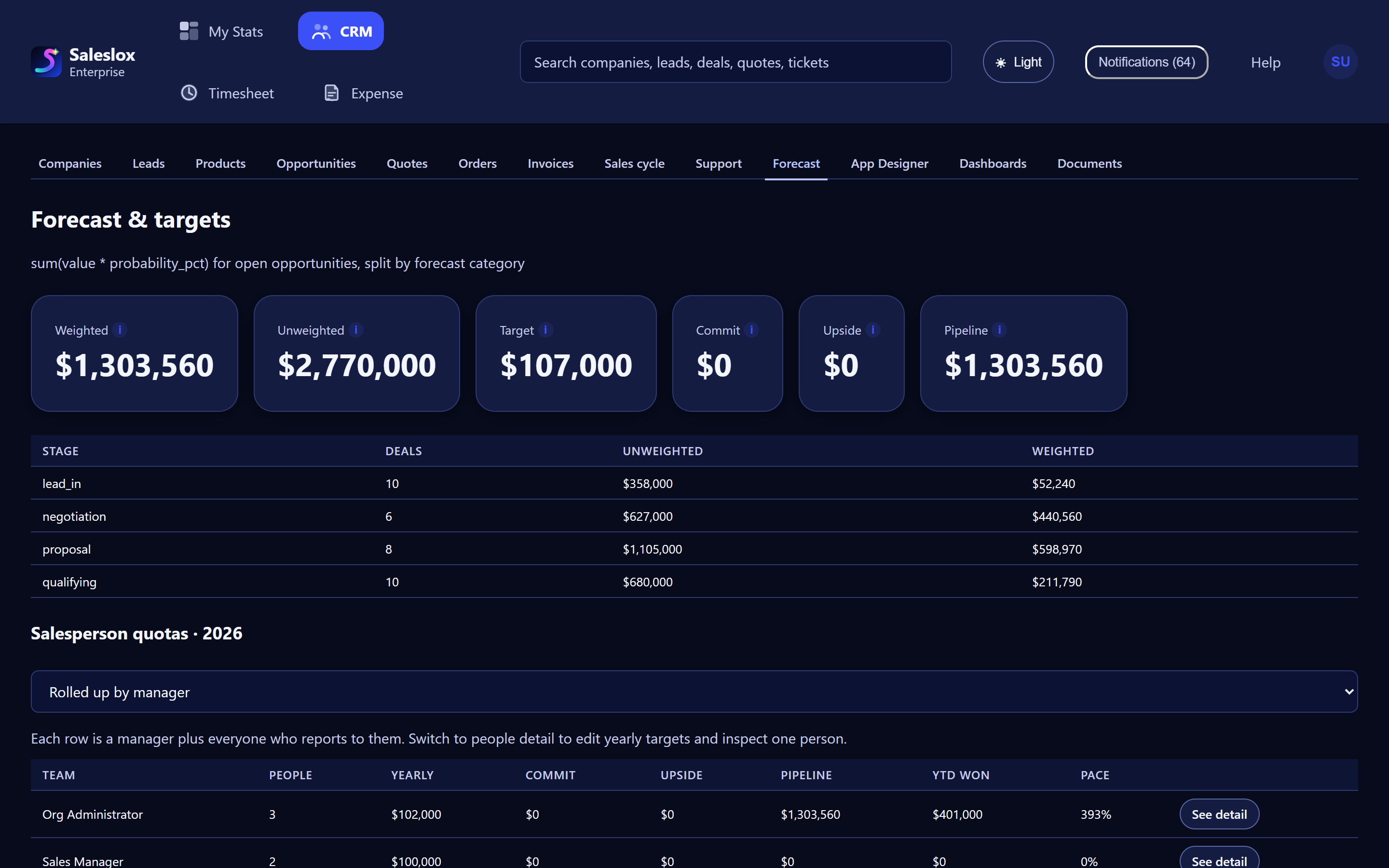
Screenshot from the Enterprise Plan
After the call
There is no “I’ll update the CRM later.” Later is Friday, and Friday is fiction. If your tool makes updates slower than talking, people will talk. Pick a CRM where stage, next action, and quote status are on the card.
Trial it on the next Monday, not after a six-week implementation. 30-day Pro, no card. The setup path is first week in Saleslox.